


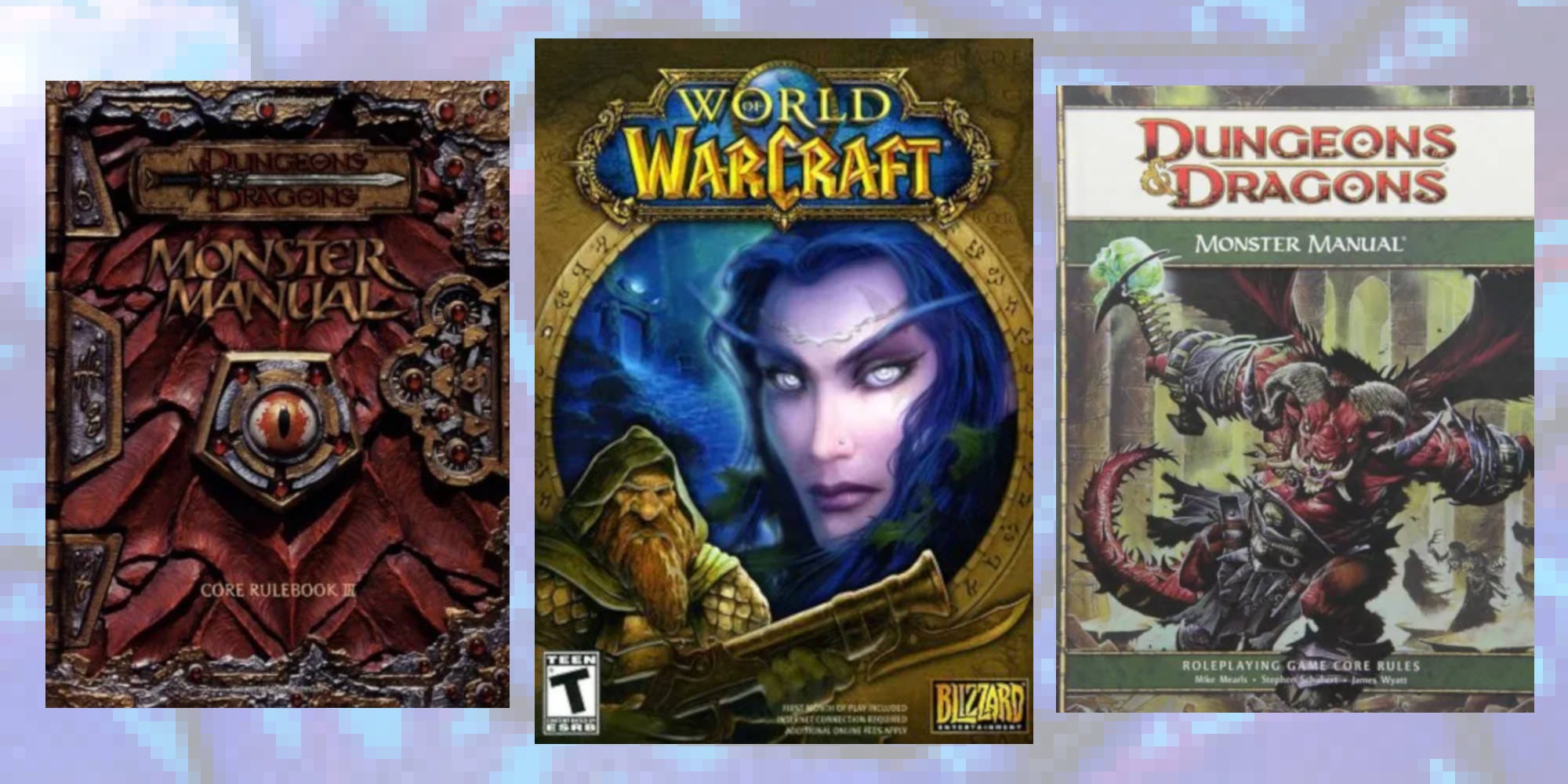
In 2000, Wizards of the Coast released the third edition of AD&D, now called simply Dungeons & Dragons, thus marking the end of the two-pronged market strategy (and the commercial termination of Basic D&D). From now on, there would be only one product line for D&D at any given time. The third edition was marked by a daring decision to license the core rules, known as the d20 System, under the Open Game License (OGL), although both Dungeons & Dragons and d20 System remained trademarks of Wizards. The motivation for this came from D&D‘s brand manager, Ryan Dancey, and was commercial in nature. It was a fact of the marketplace for tabletop RPGs that rulebooks sold far better than supporting materials such as adventure modules; the OGL spread the cost of producing support materials to other companies (latter day Judges Guilds, in effect), while theoretically driving sales of the core rulebooks. A later 3.5 edition was also released under the OGL, and for seven years D&D was the flagship product in the open gaming movement.
However, reading between the lines, it seems as if Hasbro corporate were less than pleased with what was entailed by open gaming, and when Dungeons & Dragons 4th edition was released in 2008 it came with a new, highly restrictive license known as the Game System License (GSL). This license has since been updated, but it still falls wildly short of the freedoms offered under OGL. The genius of the original OGL was that it allowed Wizards to own the premier product in a theoretically expanded marketplace (on the principle that a smaller share of a bigger market would be worth more). However, judging from the revisions in the GSL, Hasbro’s legal department had taken issue with both the freedoms being granted to potential competitors and with their lack of control over the content that might be offered. To their credit, the GSL still allowed relatively easy licensing of 4th edition books, certainly compared to the situation in other media – but it shut down almost all other kinds of support, including software, magazines and websites, and provided no affordances for content rooted in 3rd edition.
One of the interesting things about the revised GSL was its effective admission of how little of the content in the D&D settings actually belongs to Wizards/Hasbro, on account of the game even from the outset being cobbled together from dozens of different source materials and mythologies. Just thirteen monsters are listed in the revised GSL as being effectively D&D intellectual property, and of these only the Beholder and the Mind Flayer are particularly notable*. The creatures most associated with D&D such as Orcs, Elves, Dwarves etc. had already been excluded from legal protection in a landmark case between TSR and the estate of J.R.R. Tolkien, which established that no-one can legally own a race. Tolkien’s estate did claim “Hobbit” as a trademark, however, and references to Hobbits and Ents were removed from D&D in 1977 as a result of the legal case.
The net result of this new GSL was a split in the market between third party companies supporting 4th edition Dungeons & Dragons and companies unwilling to commit to the GSL (the scariest clause of which is the one which allows the terms of the agreement to be changed at any time without notice). Those who rejected the GSL either continued to support the 3.5 edition of D&D under the original OGL, or produced spin-offs such as Paizo Publishing’s Pathfinder Roleplaying Game, the appearance of which may have been a factor in souring Hasbro on the OGL. Since the whole point of the OGL as (presumably) sold to Hasbro was to drive sales of the core D&D rulebooks, the appearance of rival rulebooks may have been a deal breaker (which might also explain why the GSL expressly locked down any ability to reference the mechanics of the D&D core rulebooks).
Beyond the legal issues, 4th edition raised eyebrows because for the first time in its life the new D&D ruleset clearly showed the influence of MMOs – a change probably intended to help attract MMORPG players to the tabletop game. The core of D&D‘s cash flow lies with teenagers and university students, and the revised rules seemed to assume that making the game more like an MMO would help appeal to an audience already familiar with online adventuring. This was most strikingly apparent in the spelling out in the 4th edition rulebooks of specific ‘roles’ for combat, each of which overtly corresponded to the combat roles popularised in the World of Warcraft community (given here in brackets): defender (‘tank’), striker (‘DPS’), controller (‘crowd control’) and leader (‘healer’). Such roles make zero sense in the context of participatory storytelling or the history of fantasy novels; they emerged from game balancing issues unique to the post-MUD online dungeon-bash games.
Thus one of the most original and innovative games ever to be published became second fiddle to its electronic progeny. Dungeons & Dragons 4th edition seemed to recognise that the success of World of Warcraft lay not in its ability to support role-play, since only a minority of players participate in the game world this way, but in its slick, streamlined reward structures – inspired by the original D&D game, but tweaked to addictive excellence by the designers of computer role-playing games over the intervening decades (especially in Japan, where the genre remains the most popular form of videogame). Nothing can take away the tremendous contribution of this game to the history of play, but it is still slightly saddening to see that with its fourth edition, D&D as a commercial product became less about supporting the incredible niche hobby of participatory storytelling that it founded, and much more about wringing the spare change out of teenagers.
Are you, or were you, a Dungeons & Dragons player? I’m interested in hearing from all players of the game who have opinions about the different rulesets, particularly players who still use 1st or 2nd edition AD&D rules or B/X D&D boxed set/Cyclopedia rules, players who refused to leave 3.5 for 4e, players who jumped ship for Pathfinder, and anyone who played 4e and enjoyed it. Thanks in advance for sharing your views!
*The full list of restricted monsters was Balhannoth, Beholder, Carrion Crawler, Displacer Beast, Gauth, Githyanki, Githzerai, Kuo-Toa, Mind Flayer, Illithid, Slaad, Umber Hulk, and Yuan-Ti.