


Originally run in May 2012 as “Implicit Game Aesthetics”
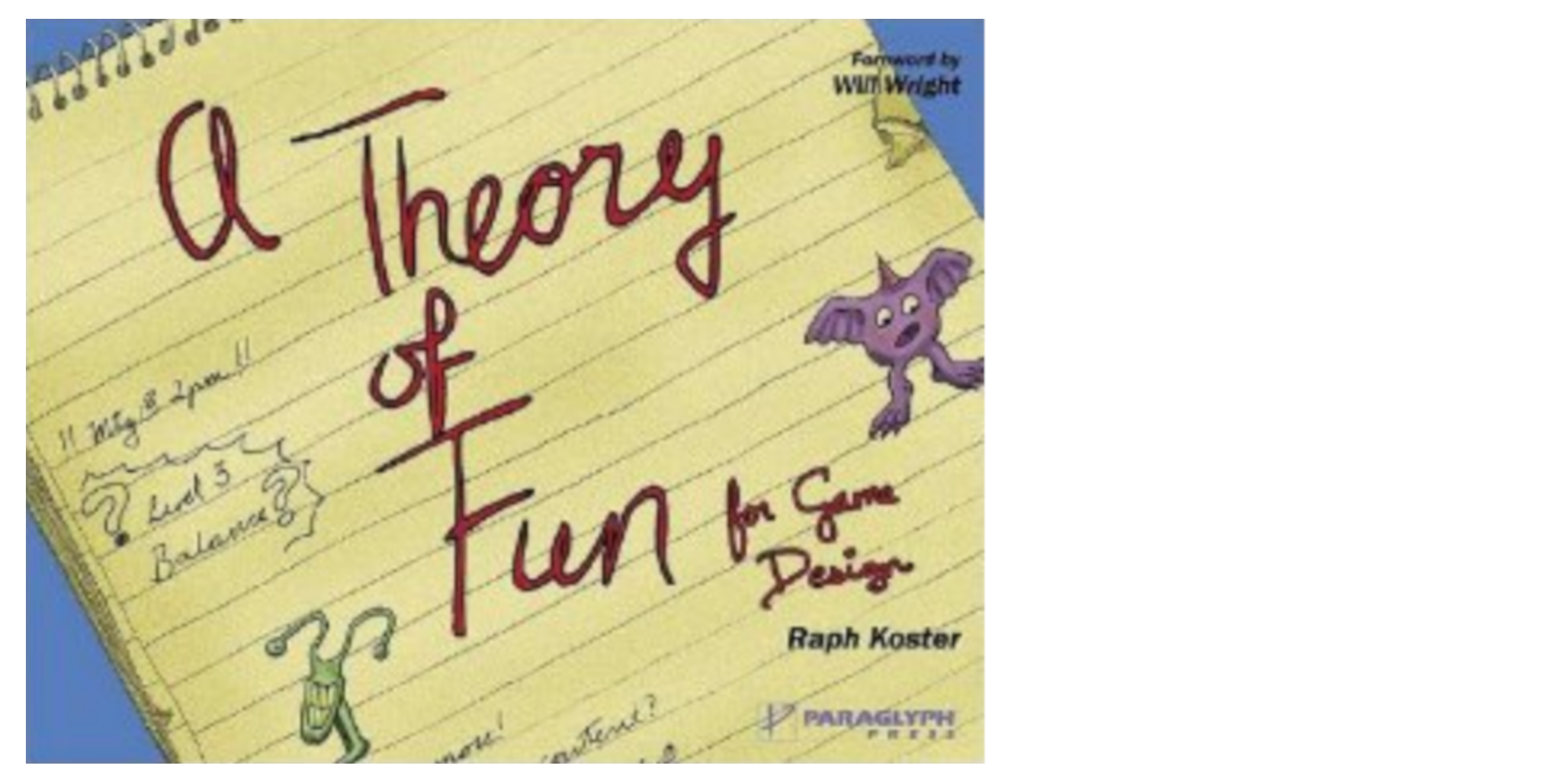
In a recent [relative to 2012!] discussion of the phenomenon of declaring certain things “aren’t games”, game designer Raph Koster approaches his definition of ‘game’ not with the properties of artefacts that qualify as games but with the player’s activity positioned as the central point of interest:
Playing a game is the act of solving statistically varied challenge situations presented by an opponent who may or may not be algorithmic within a framework that is a defined systemic model.
Putting the player first in this definition seems to prioritise the play over the game, but this sentence conceals an opposite (but complementary) stance by concluding that the player’s actions take place “within a framework that is a defined systemic model”. The entire definition could therefore be run backwards as “a game is a defined systemic model within the framework of which players face a (possibly algorithmic) opponent who presents statistically varied challenge situations the player solves”. Since the purpose of the current enquiry is to uncover aesthetic assumptions about games, the final clause appears to be the decisive factor, although there is no explicit system of priorities as is found in Crawford’s taxonomy. Once again, the victory (“challenge situations”) and conflict (“presented by an opponent”) aesthetics appear central, and the phrase “statistically varied” may be a pointer towards the uncertainty aesthetic we will explore later. Koster’s unique contribution, when compared to Crawford and Costikyan, is the explicit focus placed upon the systems aesthetic that was foreshadowed in Costikyan’s allusions to resource management.
What the systems aesthetic excludes are kinds of play that lack any kind of formal definition. Children’s games of make believe, on this reading, do not qualify as games because they are not formally specified (hence they are play, but not games). However, Koster could presumably argue that there is a defined systemic model in place here by arguing along similar lines to Bernard Suits’ open games (which we will explore later) or by formally defining make-believe games in manner similar to Kendall Walton’s acceptance principle or something like it (see Imaginary Games for more on this).
The systems aesthetic is incredibly wide compared to the victory and conflict aesthetics, but of course Koster also includes these, thus contracting his space of interest to the point that the systemic model requirement almost ceases to contribute anything additional. A spontaneous race between two joggers might qualify as challenge with an opponent but not qualify as occurring under a defined systemic model, but this would very much depend upon whether Koster intends to include activities that can be modelled systemically but which aren’t thought this way by their players. Since any activity can be systemically modelled, it seems reasonable to presume a definition in advance is what is intended by Koster’s wording.
Of course, what a game designer does in a great many projects is precisely the creation of these kinds of systemic definitions, so favouring the systems aesthetic is arguably to valorise the contribution that game designers make to a game. However, it is broadly the case in both videogames and boardgames that the kinds of systems in use become engrained in the culture that plays and makes those games. For instance, the fundamental systemic elements of first person shooters changed only marginally between Quake (id Software, 1996) and Halo: Combat Evolved (Bungie, 2001), and similarly between Halo and Call of Duty 4: Modern Warfare (Infinity Ward, 2007). There was no redesign of the systemic elements involved, only modifications to interface efficiency (e.g. Bungie's abandoning of clunky weapon inventories for a simpler two-gun system) and enhancements to multiplayer (e.g. Infinity Ward’s importing of experience point mechanics from RPGs). The bottom-up design of complete game systems is rare outside of very decision-centric kinds of games (e.g. strategy games, computer RPGs), and it is possibly the case that the systems aesthetic expresses a preference for these kinds of games – Crawford echoes this sentiment when he calls Costikyan's allusion to resource management “a strategy gamer's approach to the problem”. The fact that the vast majority of game designers fit personality inventory archetypes associated with strategic thinking is probably no coincidence.
However, Koster’s definition is only a part of his aesthetic judgement concerning games. In his justly acclaimed book A Theory of Fun for Game Design (2005), pictured above, Koster provides a definition of fun in which he expressly excludes all manner of experiences as fun. For instance, rollercoasters only provide “visceral fun” and are thus ‘not fun’ according to Koster's approach. Here we can see value judgements coming to bear on the aesthetics of play not from the conceptual approach to ‘game’ but from the conceptualisation of ‘fun’. That Koster excludes all kinds of “visceral fun” as being fun is one of the strangest value judgements in the entire discourse of game studies, since to a great many players these kinds of experience are the very essence of fun! Instead, Koster positions learning as the central experience of fun, stating:
Games are puzzles to solve, just like everything else we encounter in life [and] serve as very fundamental and powerful learning tools.
This seems on the surface to be a value judgement in respect of problem solving that has already been collected under the aforementioned problem aesthetic, but Koster also has a distinctly new contribution: it is not the puzzle or problem or decision that is important, it is the learning. He is willing to combine goal-oriented games and “playing make-believe” under a category he defines as “iconified representations of human experience that we can practice with and learn patterns from”—i.e. he is happy to unify all forms of play under the auspices of learning, although he can only achieve this by dismissing, a priori, any kind of play or fun that does not fit this description as “visceral”. Even though it does not appear directly in his definition of game, Koster advances a learning aesthetic that is relatively unique in the literature, and quite popular among the game studies community. This learning aesthetic is intimately related to the problem aesthetic, which Koster occasionally promotes directly, e.g.:
All art and all entertainment are posing problems to the audience.
At other times, he stresses the learning aesthetic more directly:
The definition of a good game is therefore “one that teaches everything it has to offer before the player stops playing”. That’s what games are, in the end. Teachers. Fun is just another word for learning.
I have found (unsurprisingly) that teachers of games courses are particularly satisfied with this approach! However, it is deeply problematic to claim that the learning aspect of play is fundamental to games while also recognising (as Koster does) that this learning aspect is central to life and cognition in any context. That our neural architecture learns from all experiences is not a statement about play or games but merely an observation about neurobiology. Not all fun is about learning, as Koster admits by segregating “visceral fun”, and if we redefine ‘fun’ so that it is just about learning then we are left with a vacant tautology.
Koster even strays into metaphysics to defend his position, claiming: “Play developed to teach us about survival.” This teleological claim is not empirically grounded and is either untestable or simply incorrect (for more on this kind of statement, see my forthcoming [in 2012!] book The Mythology of Evolution). Koster is correct that games can be powerful learning tools, and makes many cogent observations in this regard, including the correct linking of the reward chemical dopamine to learning. Still, to make learning the central feature of games is an aesthetic value judgement, particularly since many players (unlike many game designers) do not enjoy learning when it is challenging but only when it is fun (in the wider sense) or interesting to them as individuals. This argues against a strong identification between fun and learning.
That Koster’s position involves an aesthetic choice can be seen clearly in his condemnation of players who are enjoying playing but are not learning, as the following quote demonstrates:
Going back through defeated challenges in order to pass time isn’t a productive exercise of your brain's abilities. Nonetheless, lots of people do it... But once you get past the point of doing something perfectly, do yourself a favour and quit the game.
Why should players stop doing what they are enjoying just because they aren’t learning? Unlike Koster, and those who share his aesthetic tastes, there are many players for whom the exercise of mastery is more fun than learning, and perhaps also more fun than conflict or strict victory. This mastery aesthetic is not something anyone has espoused via a definition of game, to my knowledge, but it can be found among players and is distinct from both the victory aesthetic, which takes pleasure only in beating the challenges, and from the learning aesthetic since it valorises not the process of gaining perfection but the perfection itself. That this approach to play exists is not disputed by Koster—”lots of people do it”—it is simply his value judgement that this kind of play is inferior because it does not entail learning.
Next week: Cook’s Chemistry