


This piece from October 2005 struck me as a fascinating snapshot of a particular time, what you might call the PS2 era, when the games industry was still dependent upon retail channels and co-operation with Hollywood was a lifesaver for many developers. What a great distance we’ve come in the last twenty years!
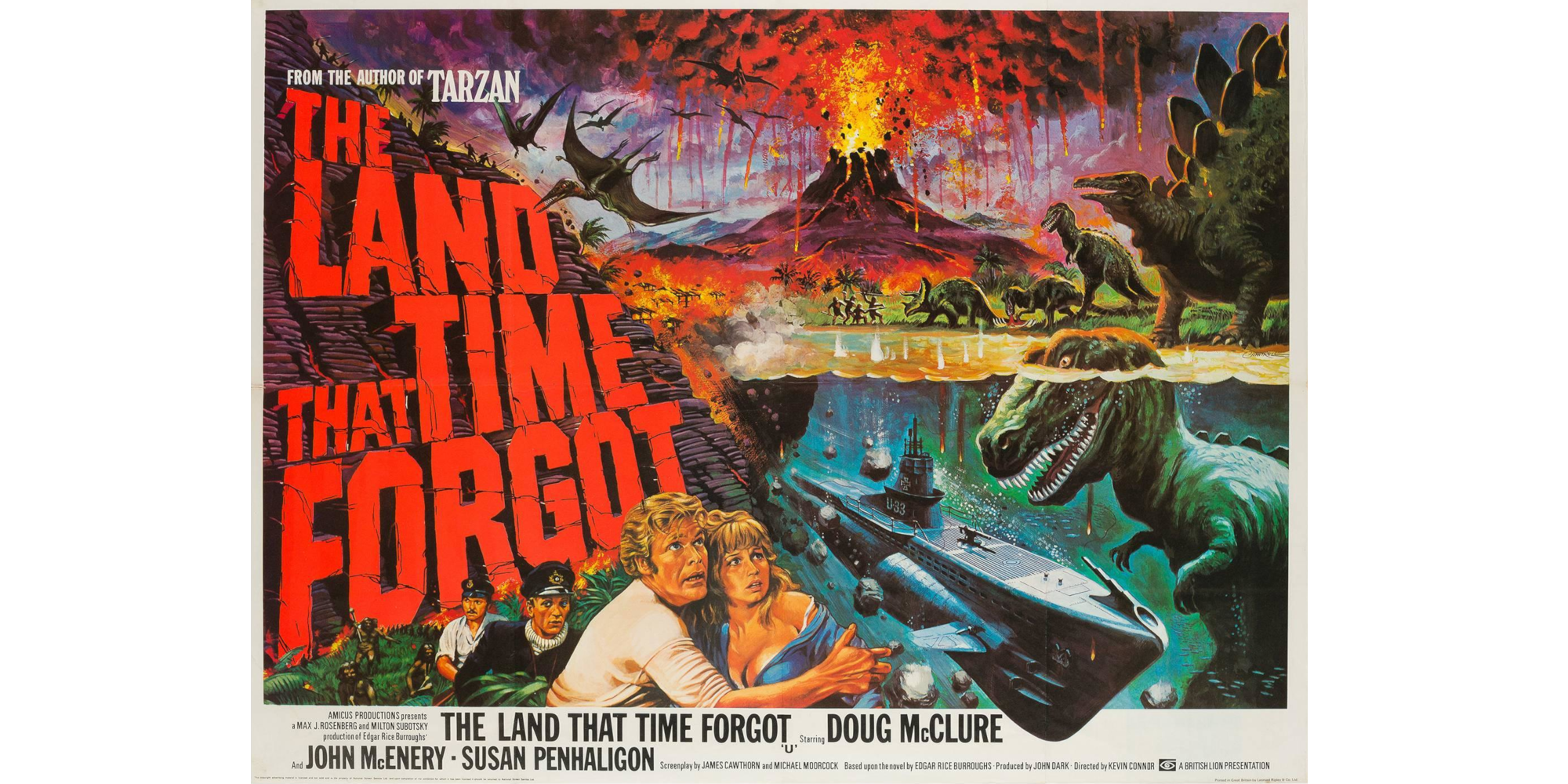
It’s not a great secret that I have followed the writing of Michael Moorcock for many years, and that I learned a lot about writing from his advice and techniques. One of his literally hundreds of books is Letters from Hollywood which, logically enough, is a collection of letters Moorcock wrote to his friend J.G. Ballard while he was working in Hollywood. Moorcock's experiences became truly grim and depressing while working for a particularly tyrannical director (unnamed, although a friend has told me who it is most likely to have been) – an incident which makes the Coen Brothers’ Barton Fink seem not so far from real life! Moorcock’s problem was that he wanted to tell good stories. But Hollywood's not about telling good stories, it's about telling popular stories, stories that many people will pay to come and see.
Moorcock’s experience soured him to the Hollywood film industry. He says: “I admire all the good films that are made in spite of the system!” Surprisingly, Moorcock has decided to allow a film version of his Elric saga to be made, a fact which suggests to me that he is aware of his own mortality [although this project did not in the end proceed]. Many sci fi and fantasy authors only allow their films to be made when they are in their twilight years and most, like Frank Herbert, do not live to see the theatrical release. (Moorcock, incidentally, already had one of his books turned into a film, although he is not overly fond of the results). Even when you don’t like the Hollywood system, there’s still a certain majesty to the big screen that is hard to resist.
The problem with Hollywood is that it’s very good at what it does, which is make popular movies with the purpose of making money [well, it used to be good at this!]. Thankfully, part of making popular movies is occasionally trying new things, and another part of making profitable movies is capitalising all your niches - which includes avant garde art house weirdness (which does occasionally siphon funding out of the machine) and all sorts of interesting and rewarding films. I won’t cite examples – I’m sure you can find your own.
Greg Costikyan and others have complained that Hollywood tie-in games hurt the games industry. They do. Because most of them aren’t very good games, and high profile rubbish is bad for any industry. But they are an enormous help to the game industry in terms of keeping studios afloat. I reckon that at least half of game developers working today owe a debt of gratitude to Hollywood for providing funding that has seen them through tough times. I know my company would not have survived if we hadn’t had some license adaptations to work on in the rough years.
One can argue that we shouldn’t have to rely on money from Hollywood - sure, if the games industry was capable of running itself as a profitable business. But many developers (and several publishers!) have the business acumen of a block of cheese and at times its a wonder that the industry makes any money at all. In this regard, Hollywood has been very neighbourly, providing capital to keep us afloat at the cost of forcing us to supply some merchandising. It’s really not that bad a deal.
That we are receiving financial support from Hollywood is reasonably good news for many people who work in the games industry. But as the expression goes, give a games company a fish and it will eat for a day, teach a games company to fish and it will eat for a lifetime. The games industry could learn a lot from the way Hollywood has identified the key profitable niches (genres in the case of films) and then invested variably in all these genres on a year to year basis, thus providing the audience with a wealth of choice – and meeting the entertainment needs of millions of cinema goers. Complaints that most of these films are utter tosh are fair but misguided. Worthwhile, interesting and inventive films are still made, and the fact that they are in the minority can hardly be considered a surprise – I challenge anyone to name a media where this is not the case.
What have we copied from Hollywood? Well, mostly their franchise ideas. That Lara Croft was inspired by the Indiana Jones movies is a debatable but inevitable criticism; that Halo owes a vast debt to Aliens seems unavoidable. And in that particular case, the story elements of the game are much cruder than the story elements of its inspiration - and Aliens is hardly the deepest story around. We have a lot of nerve when we bitch at Hollywood when we haven’t got our own house in order when it comes to stories, although the situation is certainly improving and game writing is starting to achieve proper recognition as a craft.
Hollywood is an ally to the games industry – a dangerous ally, but any powerful ally has this element of risk. I do not believe that Hollywood has done anything to make the games industry a worse place, but the games industry has made itself a worse place by trying to copy Hollywood directly instead of understanding what works in the Hollywood model, and then adapting it to games. The narrative structures that work in a film are (in general terms) inappropriate to export to a game, the funding model for films is currently inappropriate for games – but it is the games industry itself which is making the mistakes, the film industry is largely an innocent bystander in our collective incompetence.
How many games are made which are basically agon plus fiero (competition with triumph over adversity)? 95% of our output is doing the same thing – targeting a relatively narrow demographic. That’s not how Hollywood works – they find every viable demographic and exploit them fully. That’s what commercial game development should be doing. (Don’t worry – nothing that happens on the commercial front will take away indie games, as these are made by enthusiasts, just as indie films are made by enthusiasts – and a more stable games industry should mean more money to fund indie development, that’s what happened in Hollywood eventually, although there’s doubtless room for improvement).
Moorcock’s line “I admire all the good films that are made in spite of the system!” applies equally well to games. I admire all the good games that are made in spite of the system! And our system is a mess compared to the Hollywood system. Hollywood is proficient at making popular movies for every corner of the audience with the goal of making money. We are terrible at making popular games for every corner of the audience with the goal of making money. And until we get good at this most basic economic challenge, the industry will be too unstable for us to comfortably support auteurship, expansive invention and advances in dynamic storytelling. Let’s learn from Hollywood in a manner that doesn't equate to copying their ideas and rendering them more blandly. Let’s learn to feed ourselves.